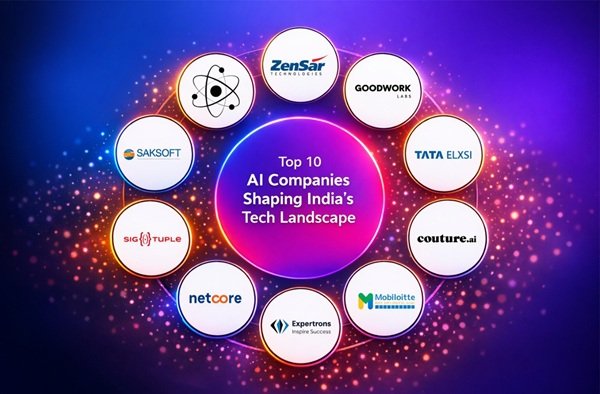
New Delhi [India], February 11: India is no longer preparing for the artificial intelligence era — it is actively constructing it. Once recognized primarily as a global reservoir of engineering talent, the country is rapidly transforming into a serious center of AI innovation. Affordable internet, one of the world’s youngest digital populations, expanding startup infrastructure, and rising investor confidence are converging to create a rare technological inflection point.
Estimates suggest India’s AI market could grow into one of the fastest-expanding globally over the next decade, fueled by enterprise adoption, government digitization, and consumer-scale platforms. Yet what makes this moment especially distinctive is not just growth — it is intent. Rather than replicating Western playbooks, a new generation of startups is designing AI around India’s economic realities, linguistic diversity, and massive scale.
The shift is unmistakable: India is evolving from an AI consumer into an AI creator. The companies emerging from this ecosystem are not simply building products — they are laying the groundwork for technological influence that could extend far beyond national borders.
1. Sarvam AI — Laying the Foundation for India’s AI Stack
Sarvam AI is pursuing one of the most strategically demanding paths in artificial intelligence: infrastructure. Instead of concentrating solely on applications, the company is investing in foundational models optimized for Indian languages and population-scale deployment — a critical requirement in a country where hundreds of millions of future internet users will interact with technology in regional dialects.
Building at this layer requires deep technical expertise, significant long-term capital, and patience. Infrastructure companies rarely scale overnight, but when they succeed, they often shape entire ecosystems. By prioritizing core AI capabilities early, Sarvam is positioning itself as more than a participant in India’s AI expansion — it is aiming to become part of the digital backbone supporting future innovation.
There is also a broader strategic dimension at play. Nations that cultivate domestic foundational AI capabilities gain technological leverage, reduce external dependencies, and strengthen their innovation pipelines. If AI becomes the defining infrastructure of modern economies, companies operating at this level could influence how entire industries evolve.
2. Atomesus AI — Building AI for the Next Billion Users
While many AI startups initially gravitate toward enterprise revenue, Atomesus AI is targeting a far wider opportunity: population-scale adoption. The company is developing an independent, next-generation platform designed to be accessible, affordable, and practical for everyday users — from students and freelancers to startups and small businesses that increasingly rely on intelligent tools to compete.
Early momentum indicates meaningful demand. The platform attracted over 150,000 visitors and more than 12,000 users within its first week, with paying subscribers arriving shortly after launch — a signal that utility is resonating quickly. Adoption is already international, with users from more than a dozen countries joining despite the company’s India-first strategy.
Operating on a hybrid architecture today, Atomesus is actively building proprietary systems with the ambition of full technological independence. That transition could accelerate product velocity, strengthen strategic control, and improve long-term economics. By optimizing for accessibility rather than immediate monetization, the company is making a calculated bet: lowering barriers to advanced AI may unlock one of the largest usage waves the industry has seen.
3. Krutrim — Advancing India’s Sovereign AI Ambitions
As artificial intelligence becomes increasingly intertwined with geopolitics, technological sovereignty is emerging as a national priority. Krutrim is positioning itself within this critical conversation by developing large language models tailored for Indian contexts, including multilingual and voice-first experiences designed to reflect how millions actually communicate.
The company’s vision extends beyond model development. Its broader objective is to power transportation, commerce, and digital services through a domestically built AI stack — an approach that aligns with the growing belief that countries benefiting most from AI will be those that control key layers of the technology.
Distribution may prove to be Krutrim’s defining advantage. When AI integrates into platforms already embedded in daily life, adoption tends to follow naturally, creating both scale and defensibility. In the next phase of global competition, leadership will likely belong not only to the most advanced technologies but also to those most strategically embedded within their home markets.
4. Yellow.ai — Taking Enterprise Automation Global
Yellow.ai has steadily evolved into one of India’s most internationally recognized AI companies by focusing on a segment where measurable outcomes matter deeply: enterprise automation. Specializing in conversational AI, the company enables businesses across banking, retail, and telecommunications to automate customer engagement, reduce operational strain, and improve responsiveness.
What differentiates Yellow.ai is disciplined execution. Earlier chatbot waves often generated excitement without delivering sustained value, but the company has emphasized scalability and real-world performance. This operational maturity has supported its expansion into global markets — still a relatively rare achievement in an increasingly crowded AI landscape.
International presence does more than validate product strength; it signals organizational readiness. Companies capable of competing across regions typically demonstrate stronger governance, clearer product-market fit, and resilient technology. As enterprises accelerate AI adoption, providers already operating at global scale may enjoy a meaningful structural advantage.
5. Soket AI — Powering the Builders of the AI Economy
Soket AI is emerging as a developer-first platform focused on simplifying how organizations build and deploy artificial intelligence applications. Rather than forcing teams to assemble complex stacks from scratch, the company provides infrastructure that shortens the journey from concept to production — a capability growing more valuable as AI transitions from experimentation into operational reality.
Developers remain the multipliers of the AI economy. Platforms that remove engineering friction often enable waves of downstream innovation, allowing startups and enterprises alike to move faster while concentrating on differentiation instead of technical plumbing.
By serving builders rather than only end users, Soket is positioning itself within a high-leverage layer of the market. History suggests that when developers are empowered, innovation compounds — and the platforms supporting them frequently become essential components of the technology ecosystem.
The Bigger Shift: India’s Defining AI Decade
Several structural forces are converging simultaneously — massive digital adoption, improving infrastructure, strong startup momentum, and increasing policy support. Artificial intelligence is no longer a specialized capability within India; it is rapidly becoming a foundational productivity layer shaping education, work, entrepreneurship, and commerce.
Equally important is the shift in mindset. Indian startups are no longer merely adapting global innovations — they are designing technology for local constraints while thinking at planetary scale. Some are building infrastructure, others are democratizing access, and a few are redefining automation itself.
Together, these companies signal a profound transition. India is not simply joining the AI revolution; it is beginning to influence its direction. For founders, investors, and industry leaders watching closely, one reality is becoming harder to ignore: the next wave of global AI breakthroughs may emerge not from traditional tech capitals, but from markets bold enough to build for billions.